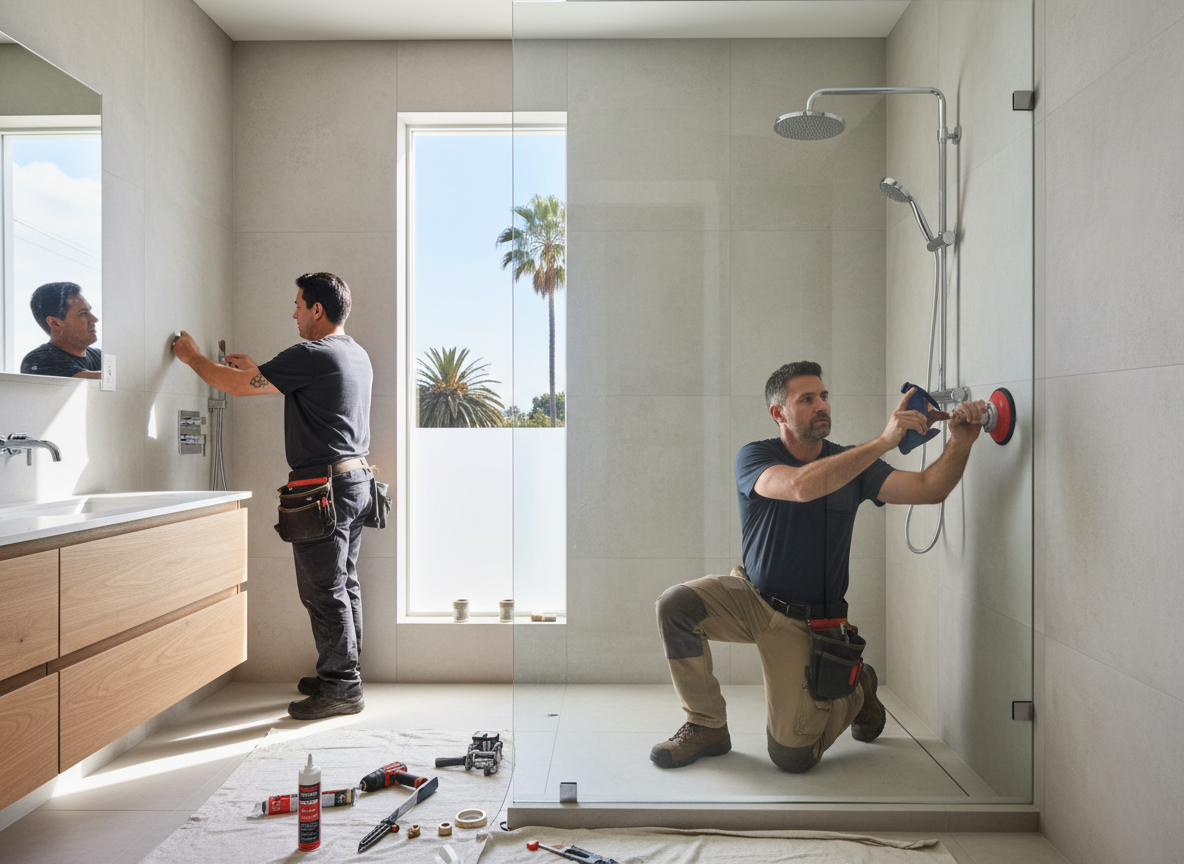
Santa Monica housing stock from the 1940s through 1970s in neighborhoods such as Ocean Park, Pico, and Wilshire-Montana often carries galvanized or early copper supply lines that corrode near the coast. Shower installation here starts with pressure testing and camera inspection of existing runs before any demolition. We select moisture-rated backer boards and marine-grade fixtures to handle the salt air that accelerates corrosion on standard hardware. Los Angeles County requires a minimum 1/4-inch slope to the drain and full waterproof membrane behind tile, rules that become critical in single-wall construction common along Ocean Park.
The area's mild Mediterranean climate keeps temperature swings small, so tile expansion joints can be narrower than inland jobs, yet the constant humidity from Santa Monica State Beach demands better ventilation planning. We route exhaust fans to exterior walls rather than attics to prevent moisture buildup in the low-pitch roofs found in Mid-City bungalows. Edge cases include converting old tub alcoves where the original cast-iron waste line sits too high; we often cut and repitch the stack to meet current flow standards without disturbing neighboring units in attached housing.
Water pressure drops are frequent in Sunset Park and North of Montana due to older 3/4-inch mains feeding multiple baths. During installation we add a dedicated shutoff and pressure-balancing valve so the new shower maintains steady temperature when other fixtures run. Homeowners sometimes skip the final leak test under the pan; we flood the area for 24 hours and check the unit below before setting tile, catching issues that only appear after the first heavy rain when groundwater rises slightly near the beach.
All work is performed from our base at 2801 Ocean Park Blvd #335 with 24/7 scheduling to accommodate tide-affected access windows on beach-adjacent streets.
Technician insight
In Santa Monica, the thing that catches most people out with Shower Installation is the hidden corrosion in galvanized lines that run under the slab in 1940s-1960s homes in Ocean Park and Pico; once you open the floor you often find the old waste line has already started separating at the joints, and the salt air makes any new steel hardware fail within five years if you don't switch to copper or PEX right away.
Pico Bungalow Shower Replacement
Homeowner in a 1952 Pico cottage reported slow drain and cold spots on the floor. We opened the wall and found the original galvanized supply line had pinhole leaks feeding into the subfloor. We replaced the run with copper, installed a new low-profile pan with proper slope to meet county code, and tied the exhaust to an exterior vent. The shower now drains in seconds and the unit below stayed dry through the next rain cycle.
How it works
- 1
Site Assessment
Measure the space, test existing lines, and review Los Angeles County permit requirements for the specific neighborhood.
- 2
Demolition and Prep
Remove old fixtures, inspect for rot in wall cavities common in 1950s Ocean Park homes, and install new waterproofing membrane.
- 3
Rough-In and Plumbing
Run new supply and waste lines with proper slope, add shutoffs, and set the pre-slope for the shower pan.
- 4
Finish and Seal
Install tile or panel system, apply grout and caulk rated for coastal humidity, then perform a 24-hour flood test.
Pricing
Cost depends on whether we reuse existing plumbing or must repipe, plus choice of tile versus panel systems; we provide an upfront written quote after the assessment.