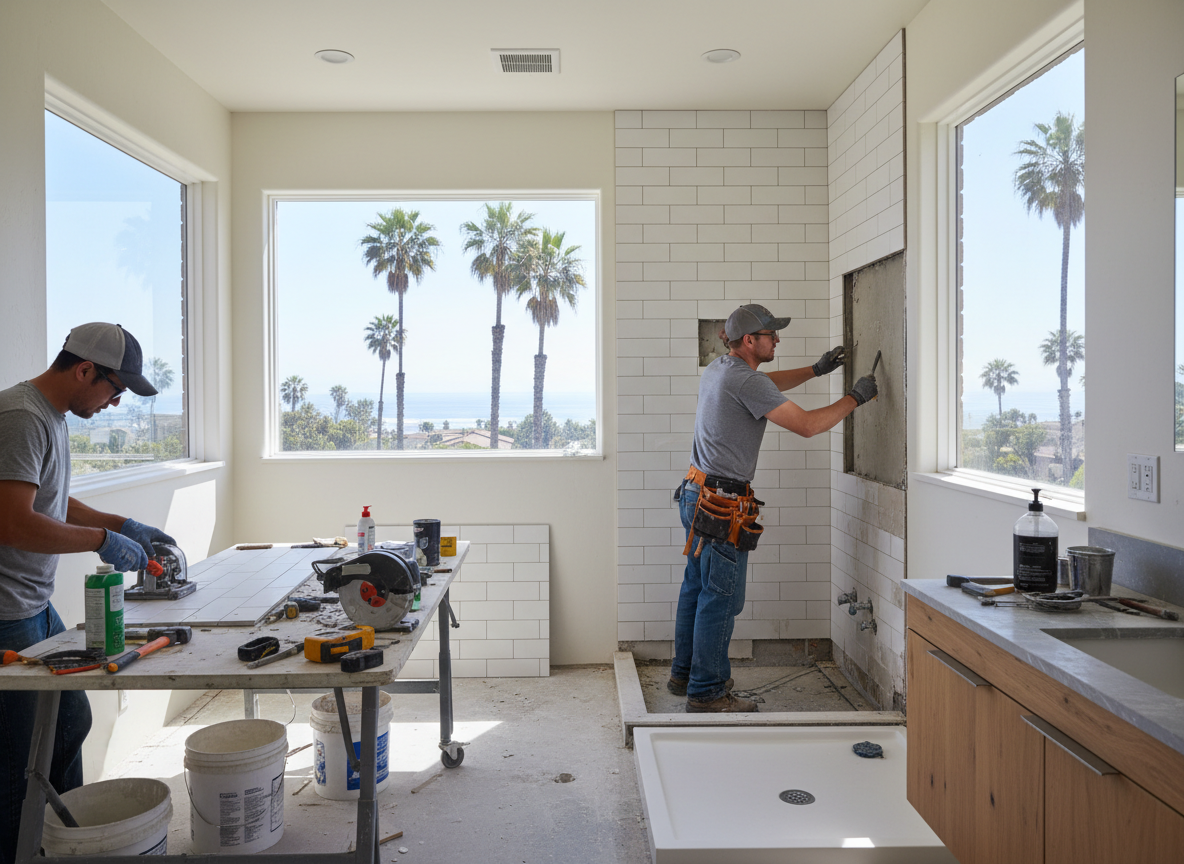
Shower replacement in Santa Monica often starts with assessing the original plumbing lines common in Ocean Park and Wilshire-Montana bungalows built before 1960. These cast-iron or galvanized pipes frequently show corrosion accelerated by salt air drifting in from Santa Monica State Beach and Palisades Park. We remove the old pan and surround while checking for water intrusion behind the walls, a frequent issue where the mild winters still allow enough moisture to promote mold in poorly ventilated spaces.
Materials must withstand the area's moderate winters and cool summers without rapid degradation. We favor acrylic or fiberglass bases with marine-grade backing and epoxy grout that resists the humidity rolling in from Venice and Santa Monica Beach. In Mid-City and Pico neighborhoods, matching existing tile patterns from the 1940s and 1950s requires sourcing period-appropriate pieces or custom cuts to satisfy Los Angeles County permitting on historic-adjacent properties.
Edge cases include tight access in North of Montana cottages where doorways were never widened for modern shower units and the need to reroute drains around mature tree roots common near Sunset Park. We always verify slope and waterproofing membrane integrity to meet current county standards before closing walls, preventing callbacks during the occasional heavy rain event that still occurs despite the overall dry Mediterranean pattern.
Common Materials for Coastal Conditions
Acrylic pans with reinforced bases hold up better against salt exposure than natural stone in Santa Monica homes. Epoxy grout and marine sealant prevent moisture wicking at the curb, a detail that matters when windows face the Pacific.
Technician insight
In Santa Monica, the thing that catches most people out with Shower Replacement is the salt air corrosion on older galvanized lines in Ocean Park and Sunset Park homes. Homeowners often expect a simple swap until we open the wall and find pinhole leaks that require rerouting before the new pan can go in.
Pico Neighborhood Shower Replacement
Homeowner reported slow drain and musty smell after recent rains. We found rotted subfloor and corroded drain line tied to the original 1950s plumbing. Replaced the line, installed new membrane and acrylic base, then retiled to match existing walls. Shower now drains properly with no moisture issues.
How it works
- 1
On-Site Assessment
Measure the existing shower footprint and inspect plumbing and subfloor condition at the Santa Monica address.
- 2
Demolition and Prep
Remove old pan, tile, and drywall while protecting adjacent floors and checking for hidden water damage.
- 3
Plumbing and Waterproofing
Update supply lines and drains as needed, then install new waterproof membrane and slope the pan.
- 4
Installation and Finish
Set new shower base and walls, apply grout and sealant, then test for leaks before cleanup.
Pricing
Upfront quotes based on scope and chosen materials; contact us for current ranges.